
Our family apiary
Beekeeping woven into our family history.
The Lisecki family’s beekeeping tradition dates back to 1921. The apiary that grew into today’s Dary Pszczół was established by Kazimierz Lisecki in Dyniska in 1949.
Where it began
Four colonies and years of patient work.
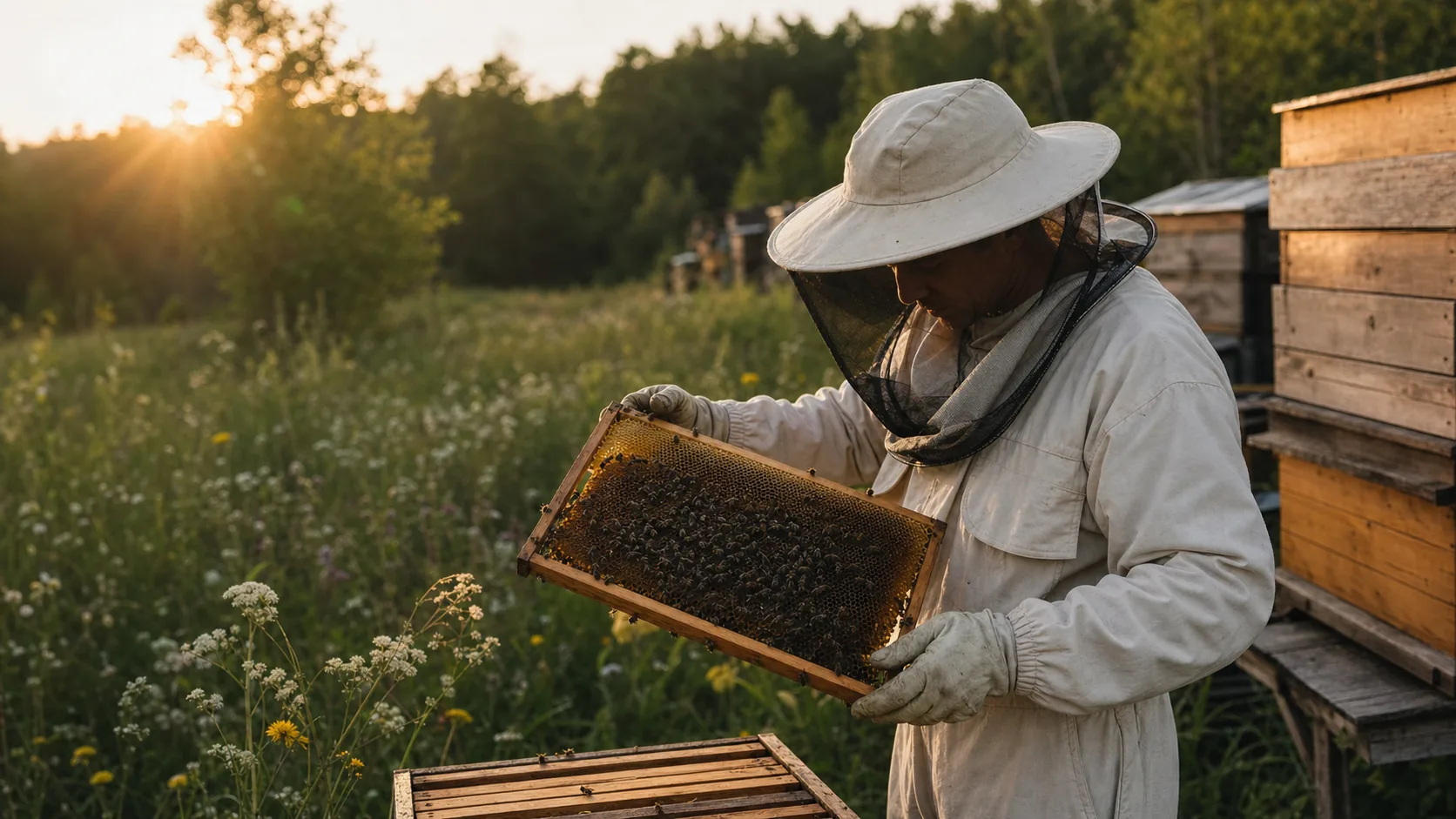
Kazimierz began with four bee colonies housed in traditional Warsaw-type hives. At first it was a small stationary apiary, developed patiently over the following years. Knowledge gained at the hives passed from one generation to the next, while the apiary and the family’s involvement continued to grow.
From generation to generation
The milestones that shaped our apiary.
-
The beginning of a family tradition
Beekeeping knowledge and experience begin to be passed down in the Lisecki family.
-
Kazimierz establishes his apiary
Kazimierz Lisecki starts his own beekeeping operation with four colonies in traditional Warsaw-type hives.
-
Two generations working together
The apiary reaches 38 colonies. Andrzej Lisecki joins his father in running it.
-
A professional apiary
After years of steady development, the operation reaches the scale of a professional apiary.
-
The name Dary Pszczół is adopted
The apiary adopts the name Gospodarstwo Pasieczne “Dary Pszczół”. Andrzej and Urszula run around 250 colonies, and the apiary later grows to approximately 500.
-
Another member joins the family team
Magdalena, Wojciech’s wife, joins the work at the apiary, focusing mainly on queen rearing.
-
Today
Experience carried forward
Successive generations of the Lisecki family continue to shape the apiary. Tomasz and Wojciech both graduated from the Beekeeping Technical School in Pszczela Wola and continue the family’s work with bees.
A family effort
A shared responsibility throughout the season.
Running an apiary is year-round work. Each generation contributes its own knowledge and experience, while the purpose remains unchanged: attentive care for the colonies and careful harvesting of honey from the nectar and honeydew sources characteristic of our region.
Migratory beekeeping
We follow the flowering season.
The colonies are moved to areas where selected plants are flowering or honeydew is available at a particular time. This allows us to harvest distinctive varieties of honey, each with its own colour, aroma, flavour and natural crystallisation pattern.
Discover our honey